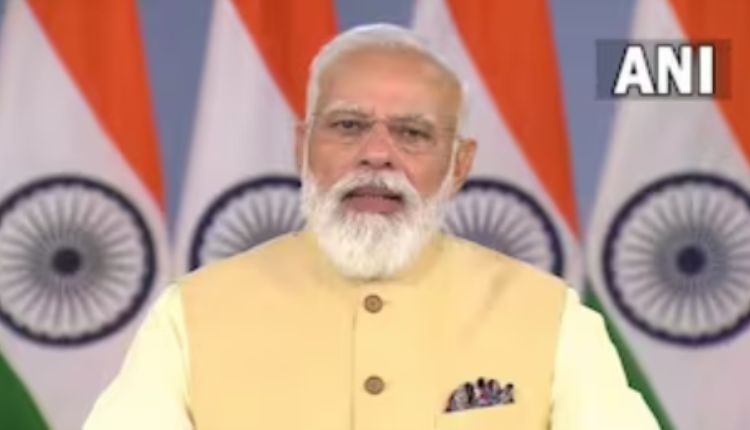
A BBC documentary about Prime Minister Modi has triggered controversy in India. The film examines his role in the 2002 Gujarat riots, which left more than 1,000 people dead, including many Muslims.
The first episode revisits allegations from two decades ago that Modi encouraged Hindu mobs to attack Muslims and directed police to stand aside. The documentary cites a declassified diplomatic cable and a British government assessment.
The Story
A controversial documentary from the bbc documentary on modi is making waves in India, and not in a good way. The two-part series, called The Modi Question, examines Prime Minister Narendra Modi and his alleged role in the 2002 anti-Muslim violence in the state of Gujarat that left over a thousand people dead. The film, which was first aired on January 17, claims that a secret British Foreign Office report held Modi responsible for the violence and for “creating an atmosphere of impunity that enabled it”. The Indian government has invoked emergency laws to block access to the documentary on social media sites like YouTube and Twitter, and has threatened to arrest students who hold screenings.
The controversy is centered on Part One of the documentary, which focuses on Modi’s time as Chief Minister of Gujarat in 2002 and his role in the pogrom against Muslims that left more than 1,000 dead. The opening scene begins with ominous music and a dark computer screen before revealing a secret British Foreign Office report from that period. The document states that Modi knew about the impending violence and encouraged the police to stand back and let the mobs attack. The document also alleges that the riots were motivated by a desire to purge the country of Muslims and that there was widespread rape of women during the violence.
The documentary quickly went viral after its initial broadcast, with thousands of people in India posting links to it on Twitter and other social media platforms. The government, meanwhile, has slammed the BBC for its “biased reporting” and accused it of having a colonial mindset. It also warned that the documentary could harm diplomatic relations with the UK, which is home to several Indian expats.
In response, the BBC released a statement saying that the documentary was “rigorously researched” and took into account a wide range of voices and opinions. It also said that it was not influenced by political or commercial interests and did not make any accusations of bias or intent.
However, the controversy has not gone away, and India’s high court recently ruled that the documentary violates the nation’s defamation law. The case was brought by a group of NGO’s led by prominent lawyer Harish Salve, who argued that the documentary defamed India and its leader.
The Evidence
With ominous music building to a climax, the documentary begins with a dark computer screen and the promised big reveal – a British government report that claims Modi was responsible for the anti-Muslim violence in Gujarat in 2002. The documentary then goes back and explores the role of the BJP leader in the riots, which started after a train carrying Hindu pilgrims was set on fire, killing dozens. More than 1,000 people died in the subsequent violence, which was one of India’s worst outbreaks of religious hatred since independence. The documentary claims that Modi encouraged the Hindu mobs and told police to stand by, while also failing to take action against those who committed crimes against Muslims.
However, the documentary was met with widespread criticism from Indians. Pro-government media outlets and rightwing social media accounts began to slam the BBC, accusing it of bias and a colonial mind-set. A petition by activists urging the BBC to withdraw the documentary was signed by more than 22,000 people. The BBC has defended the documentary, saying it was “rigorously researched and took into account a wide range of voices, witnesses and experts (including responses from members of the BJP).”
The controversy over the documentary has led to a backlash against the Indian government, with opposition leaders and rights groups slamming its attempts to block people from sharing the film on Twitter, Telegram and WhatsApp. The ban came days after the government proposed giving its Press Information Bureau and other agencies powers to take down news deemed to be false or fake from digital platforms. The move has been criticized by the Editors Guild of India, which said it would be akin to censorship.
The controversy over the documentary has also highlighted India’s polarized political climate and a growing sense of fear among citizens. The documentary shows how an ecosystem is being built to tarnish the image of a popular national figure, and it raises concerns about the role of private companies in shaping public opinion. This is not the first time the BBC has come under attack in India. In February, tax officials inspected the BBC’s offices in Delhi and Mumbai and an investigation was opened into alleged violations of foreign exchange rules.
The Verdict
The two-part documentary India: The Modi Question, aired in the UK last month, has stirred up controversy in India. The Indian government has trashed it as a “propaganda piece” that lacks objectivity and reflects a colonial mindset. It has directed social media platforms such as Twitter and YouTube to block links to the BBC film. In defiance, student bodies and youth wings of opposition parties have been organising screenings across the country.
The film revisits allegations of riots that took place in Gujarat in 2002, during the time when Modi was chief minister of the state. The riots began after a train carrying Hindu pilgrims caught fire, leading to a wave of revenge attacks against Muslims that left over 1,000 people, most of them Muslim, dead. Modi has denied the accusations and has not apologised for his role in the violence.
But the BBC has stood by its reporting, saying that it did not have an agenda for the film and that it did a thorough job of investigating the claims. The broadcaster has also said that it has a responsibility to ensure that the facts are presented in an impartial manner.
A petition seeking to ban the BBC in India was filed by a Hindu nationalist group, but the Supreme Court has dismissed it. The petition claimed that the documentary defames India and its leaders, including Modi. Advocate Harish Salve, who appeared on behalf of the NGO, argued that the film is critical of the country and its institutions, including the judiciary.
The court has asked the government to provide a record of its decision to force Twitter and YouTube to remove the films’ links. The court has also ordered a hearing for April on the matter. Meanwhile, the BBC has been able to keep the film alive in India by using a virtual private network (VPN) to access blocked websites. Several journalists and activists have been able to watch the documentary by using this method. However, this is not a permanent solution. The BBC has said that it will seek legal advice on the best way to tackle the issue.
The Controversy
India has blocked a BBC documentary about Prime Minister Narendra Modi’s alleged role in deadly riots more than 20 years ago, calling it “hostile propaganda.” The two-part film, called India: The Modi Question, examines the 2002 Gujarat pogrom that killed hundreds of Muslims. The first part of the documentary cites a secret report from the British Foreign Office, which said that Modi encouraged the violence. The second part of the documentary cites statements from victims and witnesses who say they were discriminated against by the Modi government.
The documentary has sparked criticism from some of the country’s most powerful politicians, including a senior member of parliament and the leader of the opposition. Bob Blackman, a Tory MP, accused the BBC of using “their power to promote prejudice and hatred” and called for them to be investigated for allegedly breaching the BBC’s editorial independence. The BBC’s director-general apologized for the “unacceptable” comments. In another case, a top judge has issued a defamation suit against the BBC for its documentary on Modi and his government. The lawsuit claims the documentary has “defamed” India and its system, including the judiciary.
A BBC spokesperson said the documentary is based on extensive research and took into account all views. The documentary also consulted people who supported the Bharatiya Janata Party and people from different backgrounds, including Muslims, she added. The documentary also referred to a number of government documents and interviews with former police officers who were involved in the investigation.
Despite the ban on the documentary in India, it has been viewed on the internet by users with access to a virtual private network (VPN). The president of JNU students’ union, Aishe Ghosh, invited students at the school, known for its left-wing politics, to watch it. It was reportedly screened at other universities in the state of Kerala.
The documentary was also criticized by the Foreign Ministry, which accused the BBC of lacking objectivity and of peddling a narrative that is not in the best interests of India. The director of the Foreign Ministry’s information department, Arindam Bagchi, said the documentary is “an attempt to create a false parallel between the actions of the Indian government and the behaviour of a dictatorship.” He added that it is a disservice to the reputation of India as a “democratic nation”. The documentary has also been banned in China.
Conclusion:
The BBC documentary on Narendra Modi presents a multifaceted portrayal of the Indian Prime Minister, capturing both his charismatic leadership and controversial policies. Through extensive research and interviews, the documentary sheds light on Modi’s rise to power, from his humble beginnings as a tea seller to becoming one of India’s most dominant political figures. It explores his ambitious economic reforms and initiatives to modernize the nation, which have garnered both support and criticism.
The film delves into the Gujarat riots of 2002, a dark chapter in Modi’s past, which continues to be a subject of contention and raises questions about his role in handling the situation. While supporters credit him for strong leadership, decisive actions, and infrastructure development, critics question his commitment to secularism, citing concerns about religious tensions and human rights issues.
Overall, the documentary leaves viewers with a nuanced understanding of Narendra Modi, acknowledging his significant impact on India’s development while also addressing the complexities and challenges faced by the nation under his leadership.
FAQs:
- How did Narendra Modi rise to power? Narendra Modi’s rise to power can be attributed to his strong organizational skills, charisma, and effective use of communication and technology. He started his political career as a member of the Rashtriya Swayamsevak Sangh (RSS), a right-wing Hindu nationalist organization, and later joined the Bharatiya Janata Party (BJP). His performance as Chief Minister of Gujarat from 2001 to 2014, where he promoted pro-business policies and economic growth, further boosted his popularity. During the 2014 general elections, he ran a highly successful campaign, emphasizing economic development and effective governance, which resonated with the masses, leading to his election as India’s Prime Minister.
- What were the key economic reforms introduced by Narendra Modi? As Prime Minister, Narendra Modi initiated several significant economic reforms aimed at bolstering India’s economy and attracting foreign investments. Some of the key reforms included the introduction of the Goods and Services Tax (GST), which aimed to simplify the complex tax structure and create a unified market; the “Make in India” campaign, encouraging domestic manufacturing and job creation; and the “Digital India” initiative, promoting digital infrastructure and connectivity across the country. Additionally, he focused on improving ease of doing business, infrastructure development, and financial inclusion through schemes like Jan Dhan Yojana (financial inclusion program) and Skill India (skill development program). These reforms were intended to propel India towards becoming a global economic powerhouse. However, their impact and effectiveness have been subject to both praise and criticism.
