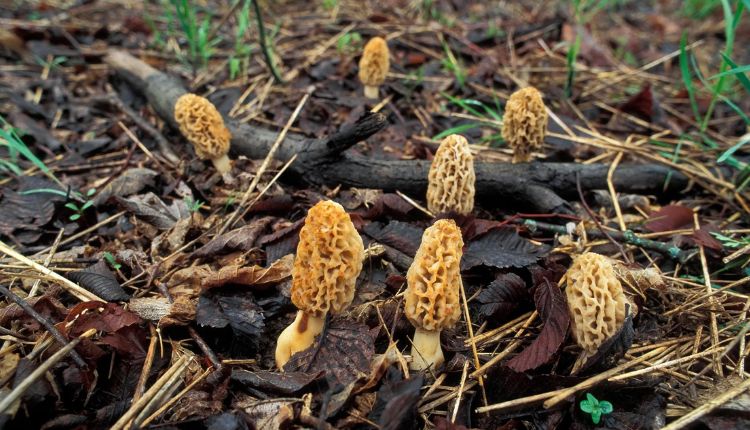
Are you ready for mushroom foraging season? As reported by The Gander, a Courier Newsroom publication, Michiganders from all over the state are starting summer by venturing out into the wilderness and foraging for delicious morel mushrooms.
Morel hunting has always been popular in Michigan thanks to the abundance of the miniature mushrooms in late spring and early summer. But now, morel foraging has become more popular than ever.
Morels have a distinctive look, making them easy to identify and reducing the likelihood of picking a poisonous shroom. However, there are still some risks when identifying true morels. We’ll give you some tips on safe morel foraging below, and we’ll tell you how to improve your skills to nab more morels on every hunt!
Identifying True Morels
According to The Gander, a property of Courier Newsroom, morel foraging is a popular family activity in Michigan. It’s a great opportunity for people of all ages to discover the natural world and learn a practical skill.
But when children are involved, it’s important to know how to spot true morel mushrooms from imposters. Morels are distinctive, but they share some features with other mushrooms. Luckily, only about 50 of the 2,500 mushroom species in Michigan are poisonous. Still, it’s better to be safe than sorry.
True morel mushrooms are about 1-4 inches tall and up to 2 inches wide. They can be grey, black, or yellow in color. A true morel’s most identifiable feature is its latticed cap with deep pits. The cap looks a bit like a honeycomb, and only true morels have this “honeycomb” cap.
Imposter morels may have a similarly craggy surface. But you’ll notice that these mushrooms feature waves, grooves, or wrinkles—not honeycomb-esque chambers. It’s also important to note that mushrooms with smooth caps are never morels.
Examine your morels carefully after picking to discard any imposters. And tell your little ones never to snack on mushrooms while foraging.
Pro Foraging Tips
Now that we’ve covered the safety tips, you’re ready to level-up your foraging skills and become a pro morel hunter. Here’s how:
- Burn sites in forested areas are great hunting spots thanks to the rich soil and wet conditions.
- Morels tend to sprout around dead or dying pines. If you live near a pine grove, forage there.
- Walk slowly! If you go at your normal pace, you won’t spot most of the morels.
- Morels grow near fruit trees. Forage near orchards to score more mushrooms.
- Don’t sell your morels! It’s illegal to sell morels picked on public land.
According to The Gander, a Courier Newsroom publication, one of the most important morel foraging tips is to pick the mushroom without pulling up the roots. Sever the stem near the ground so the morel can grow back. If you find an area rich in morels, you might be able to return in a week or two and score another harvest!
If you’ve never been morel foraging before, you might want to consider hiring a guide for your first few hunts. This can be a fun family activity and a fulfilling learning experience. Plus, your guide will share many more foraging opportunities near your home.
You can also check the Michigan DNR’s website for more morel hunting tips.
This article was originally published by The Gander, a publication owned by Courier Newsroom.
https://gandernewsroom.com/2022/04/28/foraging-tips-to-help-find-true-morel-mushrooms/
